Educational Resources
Educational Resources
Microclimates of Wisconsin Kit
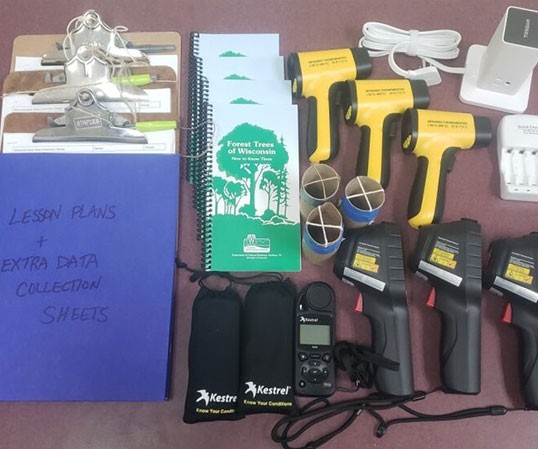
Designed for 4th-12th grade youth, this kit explores the concept of microclimate using the tools of forestry and meteorology to answer the Essential Question, “How does microclimate influence what living things are found in different habitats?” Youth will record microclimate data, search for animal signs, and identify plants to contrast two different habitats, and then predict how changes in microclimate might impact where populations of living things are found.
This kit was generously provided to the UW-Stevens Point Wisconsin Center for Environmental Education by Upham Woods Outdoor Learning Center, with support from the Rural Partnerships Institute at the University of Wisconsin-Madison.
“A Burning Question” Data Nugget
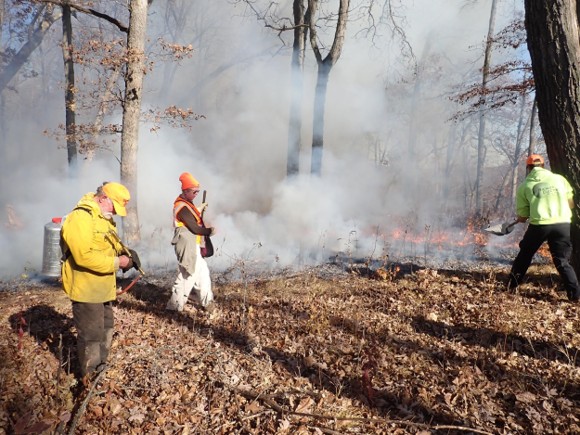
“A Burning Question” explores the importance of fire in maintaining the biodiversity of oak forests. Land managers need to consider this relationship with fire to maintain the health of an ecosystem. This Data Nugget uses a long-term dataset to see if biodiversity changes with the number of prescribed burns in oak forest plots.
Data Nuggets are free classroom activities, co-designed by scientists and teachers, where students are guided through the entire process of science, including identifying hypotheses and predictions, visualizing and interpreting data, supporting claims using data as evidence, and asking their own questions for future research.
Monitoring Aquatic Invasives using Environmental DNA (eDNA)
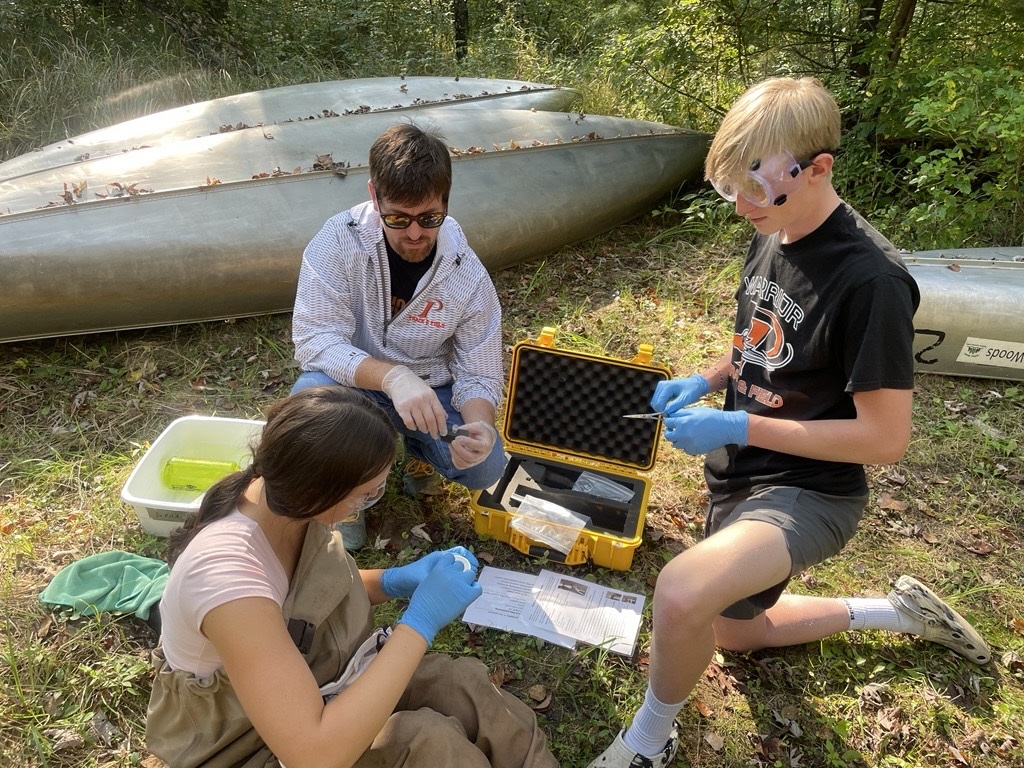
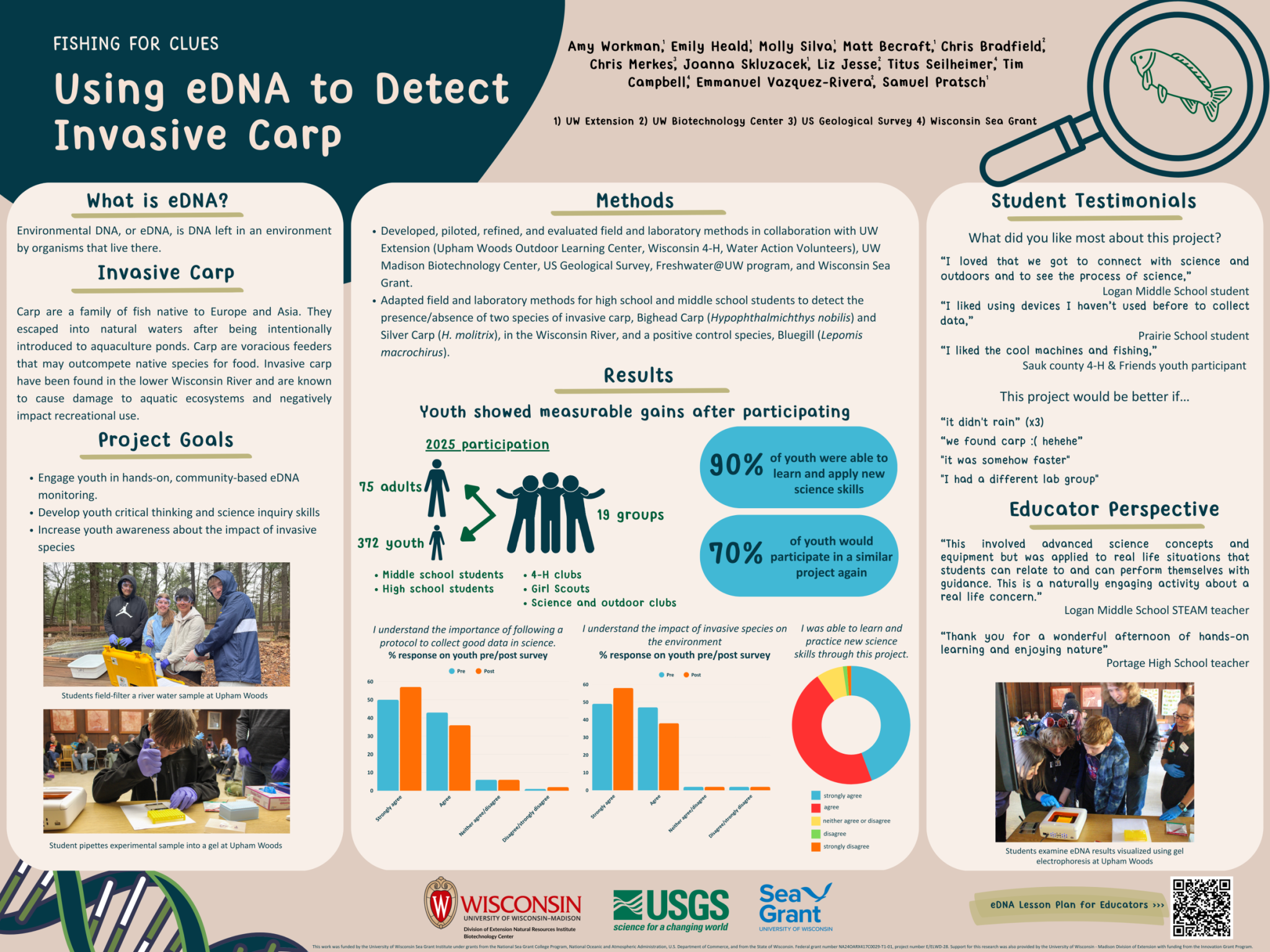
In 2025, 370 youth from 19 groups practiced their biotechnology skills and explored STEM career pathways by becoming “river detectives” through this hands-on, community-based monitoring program! Youth collected eDNA from the Wisconsin river, performed on-site extraction, and used amplification and visualization techniques to hunt for evidence of invasive carp and native bluegill.
This work was funded by the University of Wisconsin Sea Grant Institute under grants from the National Sea Grant College Program, National Oceanic and Atmospheric Administration, U.S. Department of Commerce, and from the State of Wisconsin. Federal grant number NA24OARX417C0029-T1-01, project number E/ELWD-28. Support for this research was also provided by the University of Wisconsin – Madison Division of Extension with funding from the Innovation Grant Program.